

Hoover Dam High Scalers
Updated by AZ Leisure Staff Writers on
The Hoover Dam high scalers were specialized construction workers who descended the nearly vertical walls of Black Canyon on ropes during the building of Hoover Dam. Hanging hundreds of feet above the Colorado River, they used jackhammers, pry bars and dynamite to remove unstable rock and prepare the canyon walls for the massive concrete structure below. Their dangerous and highly visible work became one of the most memorable parts of the Hoover Dam construction story.
- What High Scalers Did
- Ropes, Jackhammers & Dynamite
- The First Hard-Boiled Hats
- Who Became A High Scaler?
- Dangers Of High Scaling
- High Scaler Stories
- Legacy Of The High Scalers
- Hoover Dam High Scalers FAQ
What Hoover Dam High Scalers Did
High scalers worked on the steep canyon walls where Hoover Dam would eventually meet solid rock. Suspended from ropes, they removed loose and fractured material that could fall onto workers below or interfere with construction. They also helped expose sound bedrock so the dam could be securely anchored to the sides of Black Canyon.
The work required exceptional balance, strength and confidence at height. High scalers often carried tools and supplies with them while other workers lowered heavier equipment from above.
Ropes, Jackhammers & Dynamite
High scalers used ropes, crowbars, jackhammers and explosives to reshape and stabilize the canyon walls. Workers drilled holes into the rock, placed dynamite charges and then moved to safer positions before blasting. After each blast, they returned to pry away fractured and unstable rock.
This process was repeated across the canyon walls as crews prepared Black Canyon for the dam, power facilities and other major structures.
The High Scalers' "Hard-Boiled" Hats
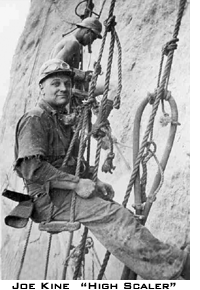
Falling rock was a constant danger in Black Canyon. Before modern hard hats were routinely issued, some Hoover Dam workers stiffened cloth hats by coating them with coal tar. These improvised protective hats became known as "hard-boiled hats."
The Bureau of Reclamation reports that the hardened hats proved surprisingly effective. Some workers were struck by falling rocks with enough force to suffer serious facial injuries while the reinforced hats helped protect their skulls.
Who Became A Hoover Dam High Scaler?
High scalers came from varied backgrounds, but the job favored people who were unusually comfortable working at great heights. Historical accounts describe former sailors, circus performers and Native American workers among the men who became high scalers.
Regardless of background, the work required agility, physical strength, steady nerves and the ability to handle tools and explosives while suspended above Black Canyon.
Dangers Of High Scaling At Hoover Dam
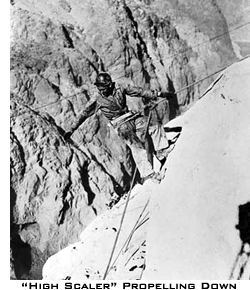
High scalers faced obvious risks from falls, blasting and falling rock, but they were also working within a construction project filled with heavy equipment, explosives and extreme desert conditions. The Bureau of Reclamation records 96 official industrial fatalities during Hoover Dam construction from a range of causes including falls, blasting accidents, rock slides, drowning, truck accidents and heavy equipment.
High scalers were among the workers most visibly exposed to danger because much of their work took place while hanging on ropes hundreds of feet above the canyon floor.
Stories Of The Hoover Dam High Scalers
The high scalers quickly became some of the most recognizable figures on the project. Their rope work high above Black Canyon naturally attracted attention from workers, visitors and photographers below, and contemporary accounts often portrayed them as unusually daring men.
One of the best-known high scalers was Joe Kine, whose image later became the model for the bronze High Scaler monument at Hoover Dam. The Bureau of Reclamation notes that Kine was one of the last surviving high scalers and that a photograph of him working on the canyon wall was used as the basis for the sculpture.
Historical accounts also describe high scalers using remarkable rope techniques to reach difficult portions of the canyon wall. One often-repeated story tells of a scaler nicknamed the "human pendulum," who helped another worker swing around an obstructing rock face to reach otherwise inaccessible areas. Such stories helped build the high scalers' reputation as some of the most daring workers on the Hoover Dam project.
Legacy Of The Hoover Dam High Scalers
The high scalers became enduring symbols of the courage and physical skill required to build Hoover Dam. Their work helped remove unstable canyon rock, protect crews below and expose solid surfaces where the dam and related structures could be anchored.
Their story is preserved in historic photographs, museum collections and the High Scaler monument at Hoover Dam. For more about the project workforce, see Who Built Hoover Dam?, and for the broader construction story see Building Hoover Dam.
Hoover Dam High Scalers FAQ
What were Hoover Dam high scalers?
High scalers were specialized workers who descended the walls of Black Canyon on ropes to remove unstable rock and prepare the canyon walls during construction of Hoover Dam.
What tools did Hoover Dam high scalers use?
They used ropes, crowbars, jackhammers, drills and dynamite to break away and remove loose rock from the canyon walls.
How high above the canyon did high scalers work?
High scalers often worked hundreds of feet above the Colorado River and canyon floor while suspended by ropes.
Why were high scalers important to Hoover Dam construction?
Their work removed unstable rock that could fall onto crews below and helped expose solid canyon walls where Hoover Dam and related structures could be securely anchored.
Who became a Hoover Dam high scaler?
High scalers came from several backgrounds, including former sailors, circus workers and Native American workers. The job required unusual agility, strength and confidence at great heights.
Did Hoover Dam high scalers invent hard hats?
High scalers and other workers improvised protective "hard-boiled hats" by coating cloth hats with coal tar. These early reinforced hats helped protect workers from falling rock.
Who was Joe Kine?
Joe Kine was a Hoover Dam high scaler whose working photograph later served as the model for the bronze High Scaler monument displayed at Hoover Dam.
How dangerous was building Hoover Dam?
The Bureau of Reclamation records 96 official industrial fatalities during Hoover Dam construction from causes including falls, blasting, falling rock, drowning, truck accidents and heavy equipment.
Historic photographs courtesy of the Boulder City/Hoover Dam Museum.
Related Hoover Dam Interest
Hoover Dam
Building Hoover Dam
Hoover Dam Diversion Tunnels
Hoover Dam Historic Photos
Hoover Dam Map
Hoover Dam Men
Hoover Dam Pictures
Along The Colorado River
Colorado River Lakes
Lake Powell
Lake Mead
Lake Mohave
Lake Havasu