Antelope Canyon
Updated by AZ Leisure Staff Writers on
Antelope Canyon is one of Arizona's most famous natural attractions and consistently ranks among the world's most photographed slot canyons. Located on Navajo Nation land just minutes east of Page and Lake Powell, the canyon is renowned for its flowing sandstone walls, brilliant shafts of sunlight, and ever-changing colors created by centuries of flash flooding and erosion. Visitors can explore either Upper Antelope Canyon or Lower Antelope Canyon on guided Navajo tours, making it an unforgettable destination for photographers, nature lovers, families, and anyone exploring northern Arizona.
Quick Facts About Antelope Canyon
- Location: Navajo Nation land near Page, Arizona
- Distance From Page: About 5 miles east
- Primary Sections: Upper Antelope Canyon and Lower Antelope Canyon
- Guided Tour Required: Yes
- Advance Reservations Recommended: Yes
- Best Months for Light Beams: April through September
- Typical Tour Length: About 1 to 2 hours
- Upper Canyon Difficulty: Easy
- Lower Canyon Difficulty: Moderate, with stairs and ladders
- Best For: Photography, sightseeing, geology and Navajo cultural experiences
 Antelope Canyon in Arizona. © James Tang
Antelope Canyon is one of the most photographed and visually stunning slot canyons in America. Carved by water and erosion over countless centuries, the canyon features sculpted sandstone walls that glow with shifting shades of orange, red, gold, and purple as sunlight filters through narrow openings above. The experience combines natural beauty, Navajo cultural significance, and a peaceful atmosphere unlike almost anywhere else in the Southwest.
Why Visit Antelope Canyon
Visitors come to Antelope Canyon for its extraordinary rock formations, guided canyon tours, world-famous photography opportunities, and unique desert scenery near Lake Powell and Page, Arizona. The canyon’s narrow passageways, flowing sandstone textures, and dramatic light beams create an unforgettable experience for travelers exploring Northern Arizona and Navajo Nation lands.

Carved over millions of years by flowing water and natural erosion, Antelope Canyon showcases some of the most remarkable sandstone formations in the American Southwest. As sunlight changes throughout the day, the canyon walls display constantly shifting shades of orange, red, gold, and purple, creating an unforgettable experience for photographers and nature enthusiasts alike. The canyon's geological beauty, cultural significance, and guided visitor experience make it one of the premier attractions in northern Arizona.
Planning Your Visit to Antelope Canyon
Because Antelope Canyon is located on Navajo Nation land, visitors must join a guided tour operated by an authorized Navajo guide. Advance reservations are highly recommended throughout the year and are often essential during spring, summer, holidays, and weekends when tours frequently sell out weeks in advance.
Plan to arrive at your tour operator's check-in location at least 30 to 45 minutes before your scheduled departure. Wear comfortable walking shoes with good traction, bring drinking water, and dress appropriately for changing desert temperatures. Summer afternoons can be extremely hot, while mornings and evenings during winter may be surprisingly cool.
Tips for First-Time Visitors
Many first-time visitors are surprised by how narrow portions of Antelope Canyon become. While Upper Antelope Canyon offers an easier walking experience, Lower Antelope Canyon includes stairways, ladders, and tighter passageways that require a moderate level of mobility.
Fine sand covers much of the canyon floor and can become airborne when groups are walking through the narrow passages. Wearing comfortable closed-toe shoes and protecting cameras from blowing sand can make the experience much more enjoyable. Visitors should also remember that tours operate on a schedule, making it important to stay with the group throughout the visit.
- Reserve your tour well in advance.
- Arrive at least 30 minutes before departure.
- Wear comfortable closed-toe walking shoes.
- Carry drinking water, especially during warmer months.
- Protect cameras from blowing sand.
- Follow your guide's instructions at all times.
- Do not touch or climb on the canyon walls.
- Allow extra travel time during peak tourist season.
Photography is encouraged, but visitors should confirm camera policies with their selected tour company before arriving. Cell phone reception is generally available near Page but may become limited during portions of the tour. Following your guide's instructions at all times helps ensure both visitor safety and preservation of this remarkable natural landmark.
Upper vs. Lower Antelope Canyon
Both sections of Antelope Canyon offer spectacular scenery, but each provides a distinctly different experience. Upper Antelope Canyon is the easier of the two to visit, with a relatively level walking surface and no ladders. It is especially popular with photographers seeking the famous beams of sunlight that illuminate the canyon during late spring and summer.
Lower Antelope Canyon offers a more adventurous experience. Visitors descend into the canyon using a series of stairways and ladders before exploring narrower passages with dramatic curves, flowing sandstone formations, and constantly changing light. While slightly more physically demanding, many visitors appreciate the smaller groups and unique perspectives found throughout Lower Antelope Canyon.
There are two primary parts of Arizona Antelope Canyon to explore.
| Feature | Upper | Lower | Walking Difficulty | Easy | Moderate |
|---|---|---|
| Stairs & Ladders | No | Yes |
| Light Beams | Excellent | Good |
| Photography | Excellent | Excellent |
| Family Friendly | Very Good | Good |
Upper Antelope Canyon
Upper Antelope Canyon is the most popular and most visited of the two slot canyons. Less narrow and more level than Lower Antelope, making it so much easier to hike. There are no stairs to climb making it more convenient for children and those with limited walking ability. Most agree that Upper Antelope Canyon is preferred for photo-taking since more light beams from above penetrate to the floor of the canyon revealing its vibrant fantasy of color. The upper canyon ends at a wash and visitors must walk back to the entrance to exit.
Lower Antelope Canyon
The lower canyon is much more narrow versus the upper canyon and there is no entrance at ground level so visitors must climb down ladders to reach the canyon floor. Lower Antelope Canyon is more shallow than the upper canyon and its penetrating sunlight beams do not occur as often or as dramatic as the Upper Canyon. The walk ends at a drop-off. Visitors can retrace back to the entrance or climb up a set of stairs and walk back along the surface rim.
Photographing Antelope Canyon
Antelope Canyon is considered one of the premier photography destinations in the American Southwest. Midday sunlight creates glowing light beams and dramatic contrasts that illuminate the canyon walls with rich colors and textures. Photographers often visit during spring and summer when the sun is higher overhead, though every season offers unique lighting conditions and visual effects. Guided photography tours may provide additional time for camera setup and specialized shooting opportunities.
How Antelope Canyon Was Formed
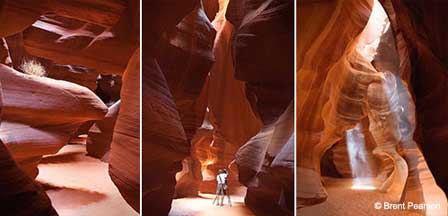
It took the forces of water, wind, and climate extremes over millions of years to create this cathedral of shapes and its brilliant array of color. During rain storms, water is collected in a basin above the slot canyon. When the basin overflows, it forms a flash flood that rushes through the canyon carving shapes of sandstone which is essentially petrified sand dunes. With each succeeding flood, carvings of new shapes and polishing of existing formations gradually occur.
Flash flooding is the primary natural hazard associated with slot canyons throughout the Southwest. Although rain may not be falling directly above Antelope Canyon, storms many miles away can produce rapidly moving floodwaters that travel through the narrow canyon with little warning. For this reason, all tours are conducted by authorized Navajo guides who closely monitor weather conditions and immediately suspend tours whenever flooding is possible.
Seasonal runoff from Antelope Creek flows through both sections of the canyon before eventually reaching nearby Lake Powell. Arizona's summer monsoon season, typically from July through September, presents the greatest potential for flash flooding, although tours may be cancelled whenever conditions warrant.
Seasonal waters from Antelope Creek flow through both canyons and drain from the south, into nearby Lake Powell. The rainiest months in the canyon area are generally August and September. But again, when conditions exist for flooding, entry to the canyons will be prohibited.
Antelope Canyon Is Sacred To The Navajo People
Many centuries ago, herds of pronghorn antelope roamed freely in the area and often used the slot canyons as a corridor to the river area. Hence the name "Antelope Canyon". The Navajo People have lived in the area for many centuries.
According to the Navajo Nation, particularly elder Navajos deemed the canyon sacred and treated it much like entering a spiritual cathedral. They paused before entering quietly giving respect and offering protection. This permitted them to leave the canyon with uplifted feelings in harmony with something greater than themselves. It was and still is a spiritual experience.
Best Times To Visit Antelope Canyon
- Spring: Excellent temperatures and increasing sunlight make spring one of the most popular seasons for tours and photography.
- Summer: Peak season for light beams, guided photography tours, and sightseeing near Page and Lake Powell.
- Fall: Comfortable weather and somewhat smaller crowds make fall an excellent time to visit.
- Winter: Cooler temperatures and quieter conditions create a peaceful atmosphere for exploring the canyon.
The peak season that attracts the largest crowds is April through October. June-August is the busiest period. To avoid big crowds, take the earliest tours that typically last 1.5 to 2.0 hours. The best time to take photos is about mid-day from April through September when the sun is overhead casting beams of light into the canyon.
Tours of Antelope Canyon
Visitors must be accompanied by a guide approved and licensed by the Navajo Nation to enter Antelope Canyon. Fees vary by specific guide and a separate entrance fee is charged. Contact one of the approved tour guides. Some tour companies offer photography and specialized custom tours.
Things To Do & See Around Antelope Canyon
Many visitors combine an Antelope Canyon tour with several of northern Arizona's most famous attractions. Lake Powell offers boating, kayaking, fishing, sightseeing cruises, and houseboat vacations, while nearby Horseshoe Bend provides one of the Southwest's most photographed overlooks. Glen Canyon Dam, Rainbow Bridge National Monument, Lees Ferry, Marble Canyon, and downtown Page all make excellent additions to an Antelope Canyon itinerary, allowing visitors to experience some of the region's finest outdoor recreation, geology, and scenic beauty during a single trip.
Where is Antelope Canyon?
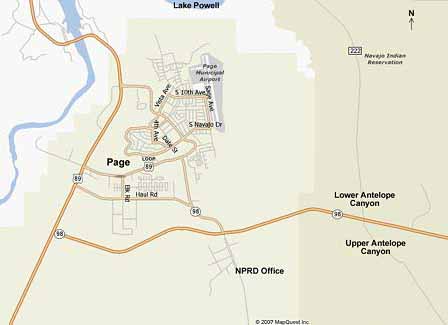
Antelope Canyon is located on the Navajo Indian Reservation about 5 miles east of Page, Arizona, just south of Lake Powell. It is about 130 miles north of Flagstaff, Arizona. From Flagstaff, AZ, take Highway 89 North to Page, AZ. Tours generally depart from Page since the gates to Antelope Canyon are closed to the public. Click on the map below for an enlarged view.
FAQ
Where is Antelope Canyon located?
Antelope Canyon is located on Navajo Nation land near Page, Arizona, just south of Lake Powell in Northern Arizona.
Do you need a guide to visit Antelope Canyon?
Yes. Visitors must take a guided tour with an approved Navajo Nation tour operator to enter Antelope Canyon.
What is the difference between Upper and Lower Antelope Canyon?
Upper Antelope Canyon is wider, easier to walk through, and known for dramatic light beams, while Lower Antelope Canyon is narrower and involves stairs and ladders.
What is the best time to photograph Antelope Canyon?
Midday from spring through early fall is generally considered the best time for photography because sunlight beams shine directly into the canyon.
Is Antelope Canyon safe during storms?
Tours are closed during dangerous weather conditions because flash flooding can occur in slot canyons during heavy rain events.
How far is Antelope Canyon from Page Arizona?
Antelope Canyon is located about 5 miles east of Page, Arizona near Lake Powell.
Can children visit Antelope Canyon?
Yes. Upper Antelope Canyon is generally easier for families and visitors with limited mobility, while Lower Antelope Canyon involves ladders and narrower passageways.
Questions and More Information
Lake Powell Navajo Tribal Office
P.O. Box 4803
Page, Arizona 86040
(928) 698-2808
The Navajo Tribal Office is located next to the LeChee Chapter House about 3 miles south of Page, Arizona on Coppermine Road which is Navajo Route 20.
Related Interest
Lake Powell & Page Arizona
Magnificent Lake Powell
Antelope Canyon
Lake Powell
Map & Directions
Lake Powell Facts
Houseboat Rentals
Distance Guide
Wahweap Marina
Lake Powell Marinas
Antelope Point Marina
Lake Powell Boat Tours
Page Arizona
About Page Arizona
Average Temperatures
Page Map & Directions
Page Bed and Breakfasts